Two Patents on Breaking Self-Driving Cars (On Purpose)
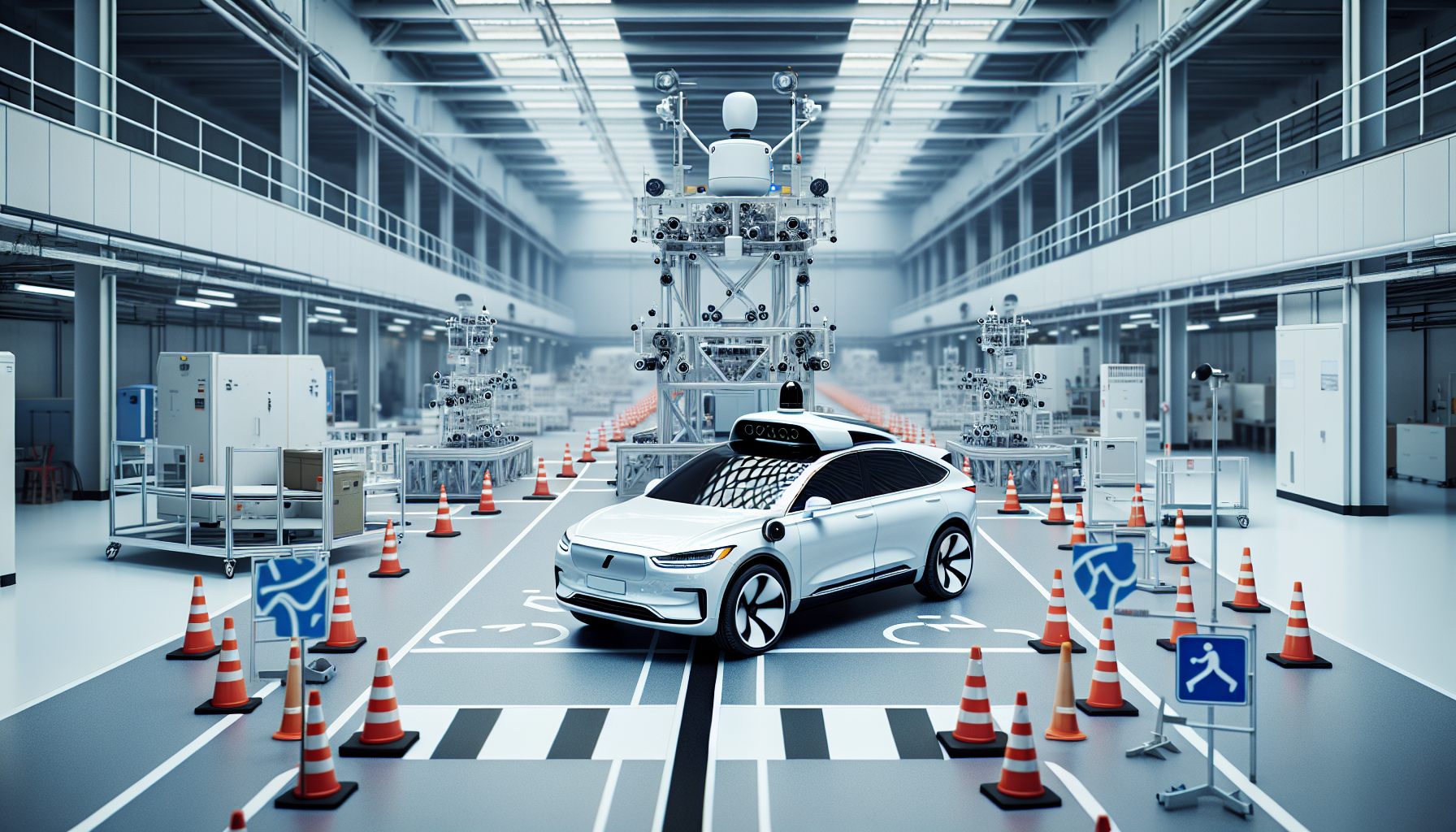
I was granted two patents on autonomous vehicle testing. Both are about the same fundamental problem: how do you know a self-driving car is actually safe?
The Problem
You can’t test every possible scenario on real roads. There are too many variables — weather, pedestrians, other drivers, road conditions, edge cases you haven’t even imagined yet. Physical testing is necessary but nowhere near sufficient.
So you simulate. But simulation has its own problem: infinite scenarios, finite time. You need to be smart about which scenarios you test.
Patent 1: High-Value Test Generation
US 20190271614
This patent covers methods for finding the scenarios that actually matter — the edge cases and weird situations that are most likely to reveal problems. Instead of testing randomly, you test strategically.
The key insight: not all tests are created equal. A test that exercises a new code path is more valuable than one that repeats what you’ve already validated.
Patent 2: Simulation and Testing Framework
US 20190278698
This patent covers the infrastructure for making simulation trustworthy. Sensor models, physics engines, scenario replay, and validation frameworks.
The key insight: simulation is only useful if it’s realistic enough that passing tests actually means something in the real world.
The Payoff
Nine years after these patents, I rode in a Tesla that drove itself coast-to-coast. The simulation frameworks we built — the ability to test millions of scenarios before deployment — are part of why that was possible.