How We Broke the Electric and Autonomous Cannonball Run Records
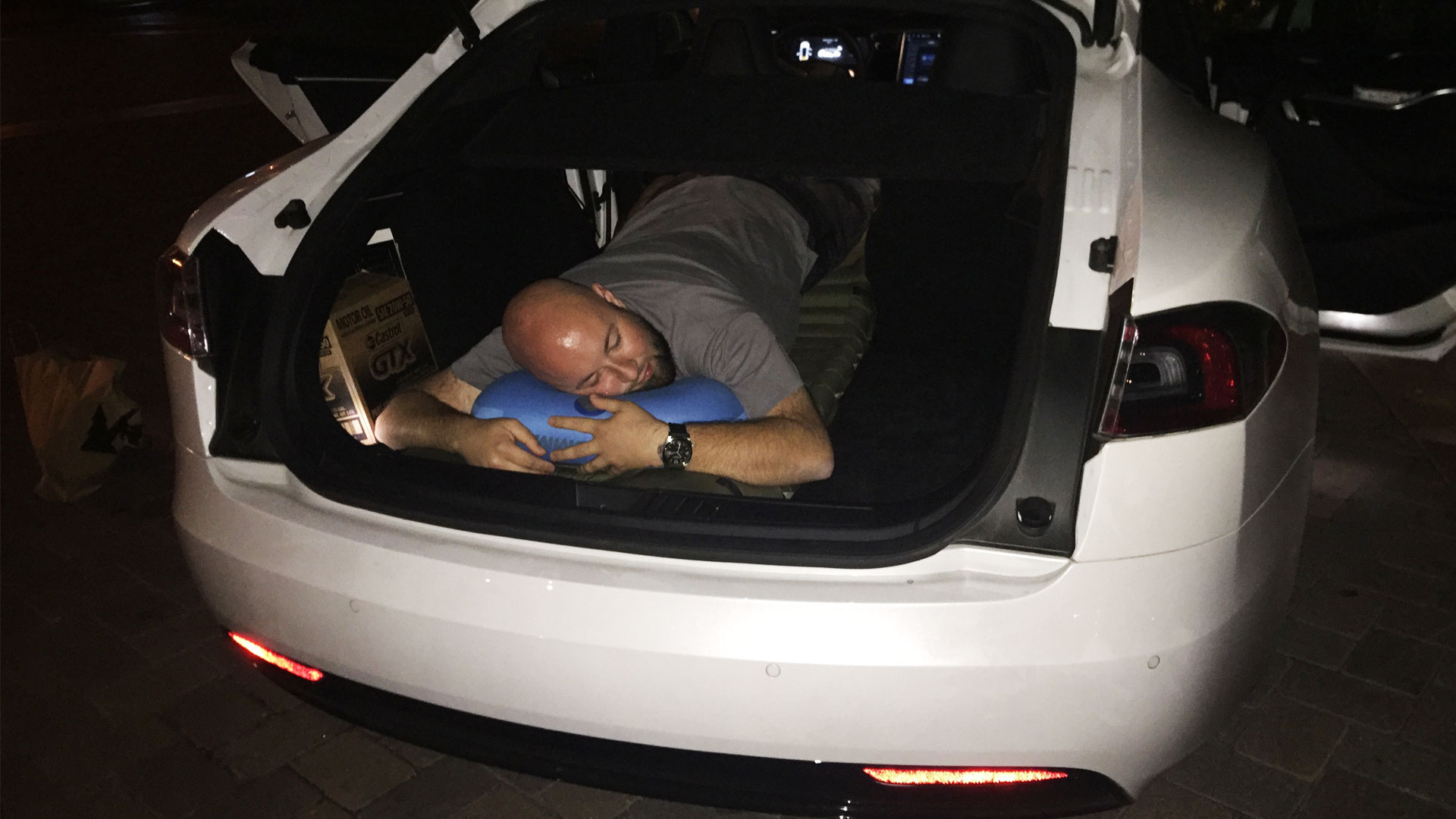
In October 2017, Alex Roy, Franz Aliquo, and I broke both the electric vehicle and autonomous Cannonball Run records in a single trip — covering 2,877 miles from Redondo Beach, California to the Red Ball Garage in New York in 55 hours, with 97.7% of that time using Tesla’s Autopilot.
The Team
- Alex Roy — Cannonball legend, held the 2006 gas-powered record of 31:04
- Franz Aliquo — Founder of Streetwars and Rental Car Rally, master strategist
- Me (Warren “Mr. X” Ahner) — Cybersecurity expert and racing instructor, with “amazing insights” into extracting maximum performance from both the Tesla’s battery and Autopilot
Alex barely knew us before the drive. Franz and I only met the night before departure. But opposing personalities and skill sets work well in high-pressure scenarios.
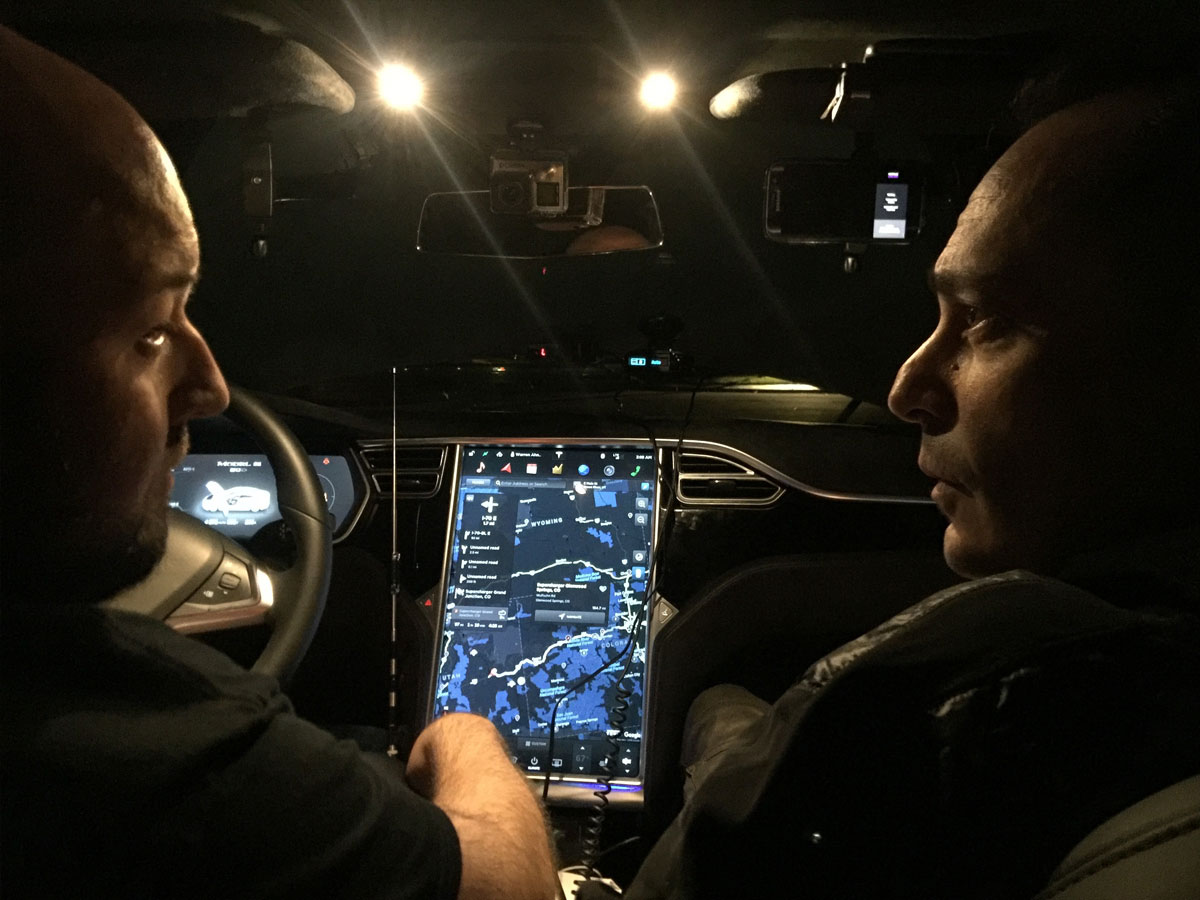 Mapping out the optimal Supercharger route
The Car
A 2016 Tesla Model S 90D — specifically not the P90D Ludicrous variant. Why? The P90D accelerates faster but has about 25 miles less range. Weight is the enemy of efficiency. We also ran on smaller 19-inch wheels to save weight and add range.
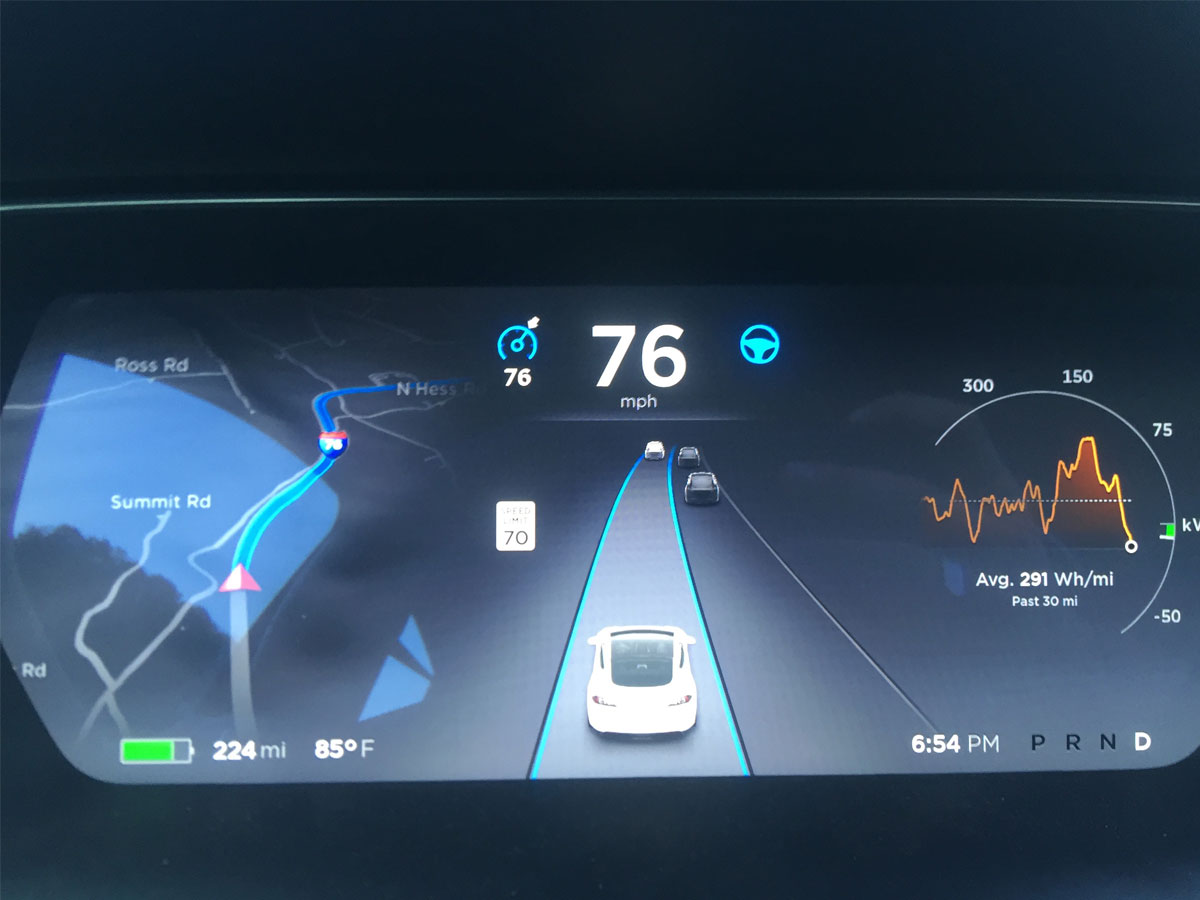 Our weapon of choice: 2016 Model S 90D
The Route
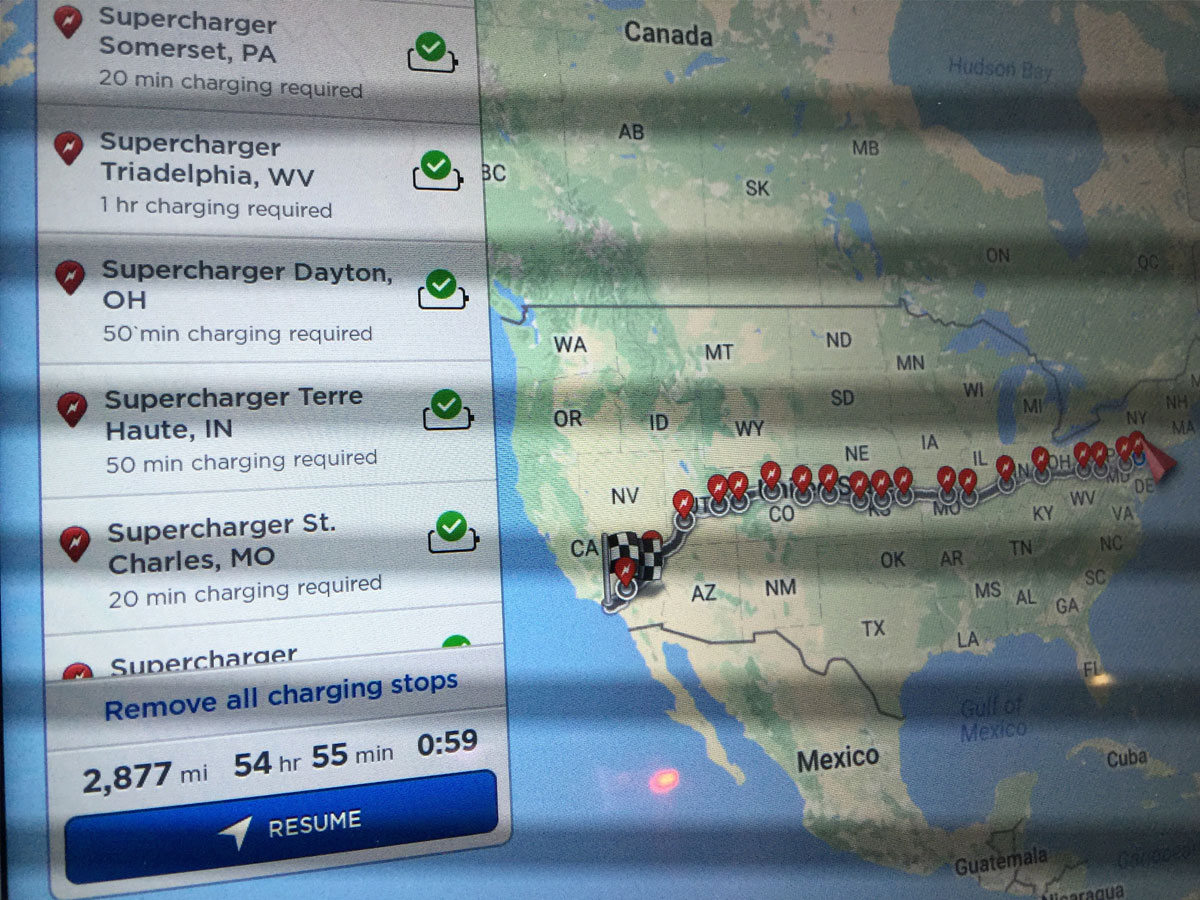
There is only one optimal route: the shortest distance along Tesla’s Supercharger network, approximately 2,877 miles. The most ideal gas-car route is 2,811 miles, but we’re bound by charging infrastructure.
How We Beat the Prior Record
The previous EV Cannonball record was 57:48. We projected 55:45 and shocked ourselves with 55:00 flat.
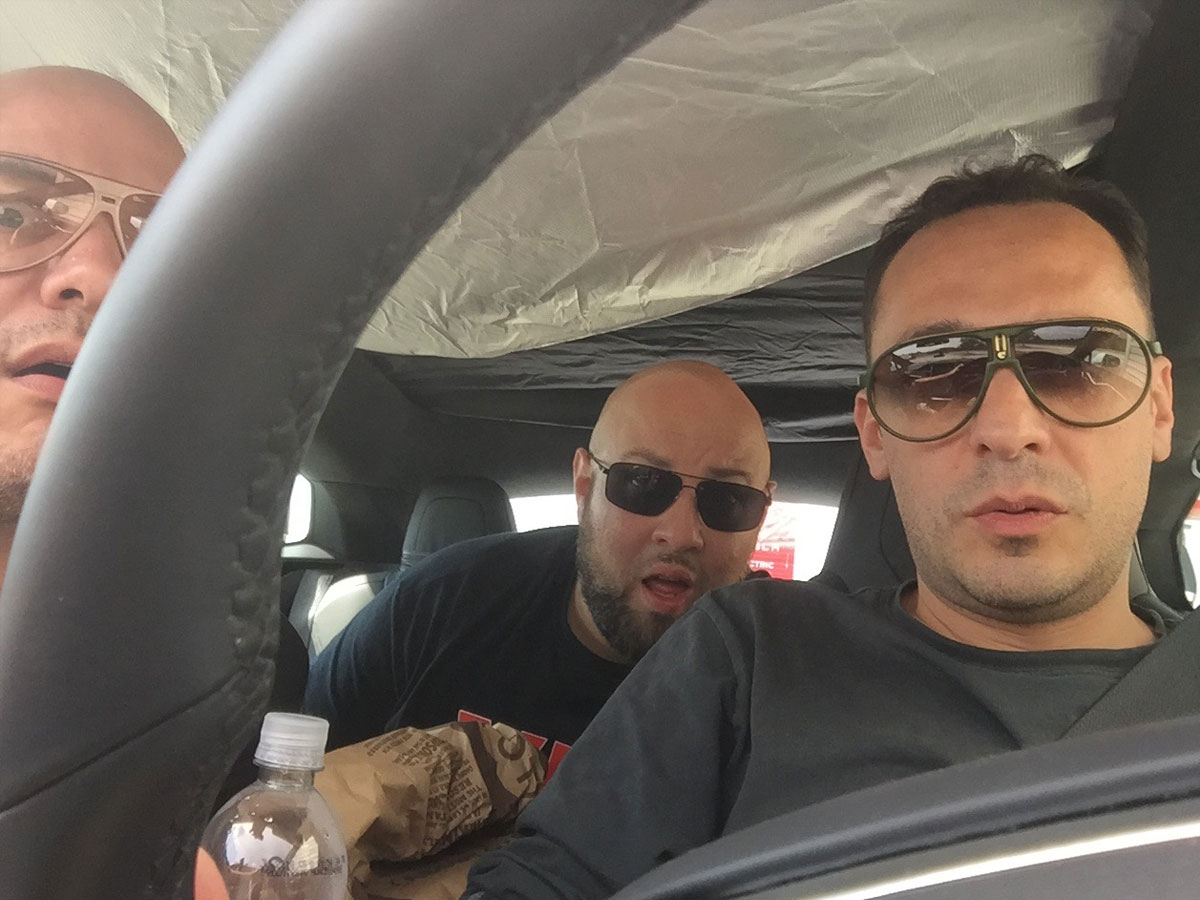 Monitoring Autopilot performance across the country
The semi-secret sauce:
- Study ambient temperatures and estimate battery temps
- Be strategic about speed (wind resistance kills range over 70 mph)
- Optimize charging stops based on real-time conditions
We hit multiple storms, including what seemed like a tornado, costing us at least 90 minutes. Despite that, our range optimization exceeded our best estimates.
As Alex put it: “It really helped having Mr. X in the car.”
The Autopilot Question
97.7% of the drive was on Autopilot. We kept at least one hand on the wheel at all times — involuntary disengagements are for amateurs. Autopilot isn’t a self-driving car, even though it often feels like one.
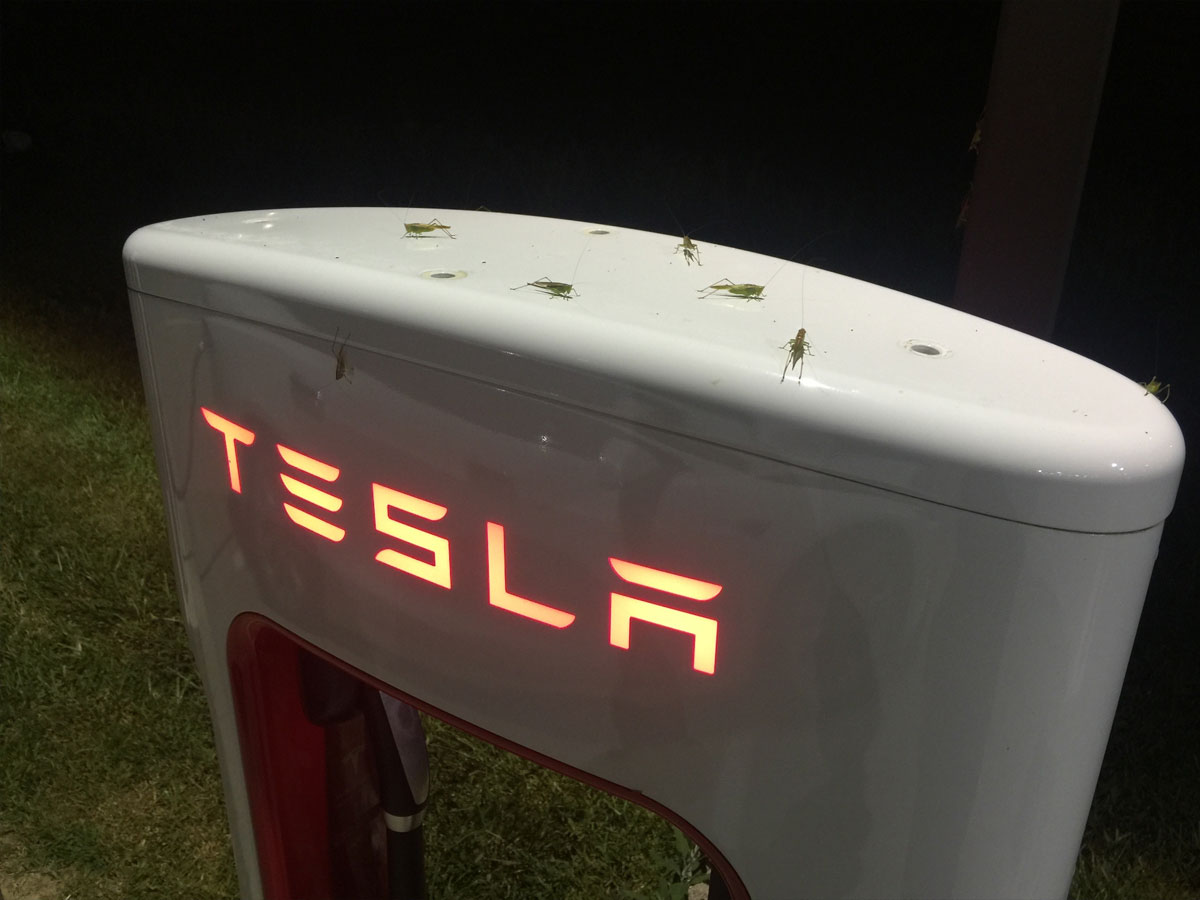 Always one hand on the wheel — involuntary disengagements are for amateurs
The kind of person who has an accident with it is the kind of person who has an accident without it.
The Tech Stack
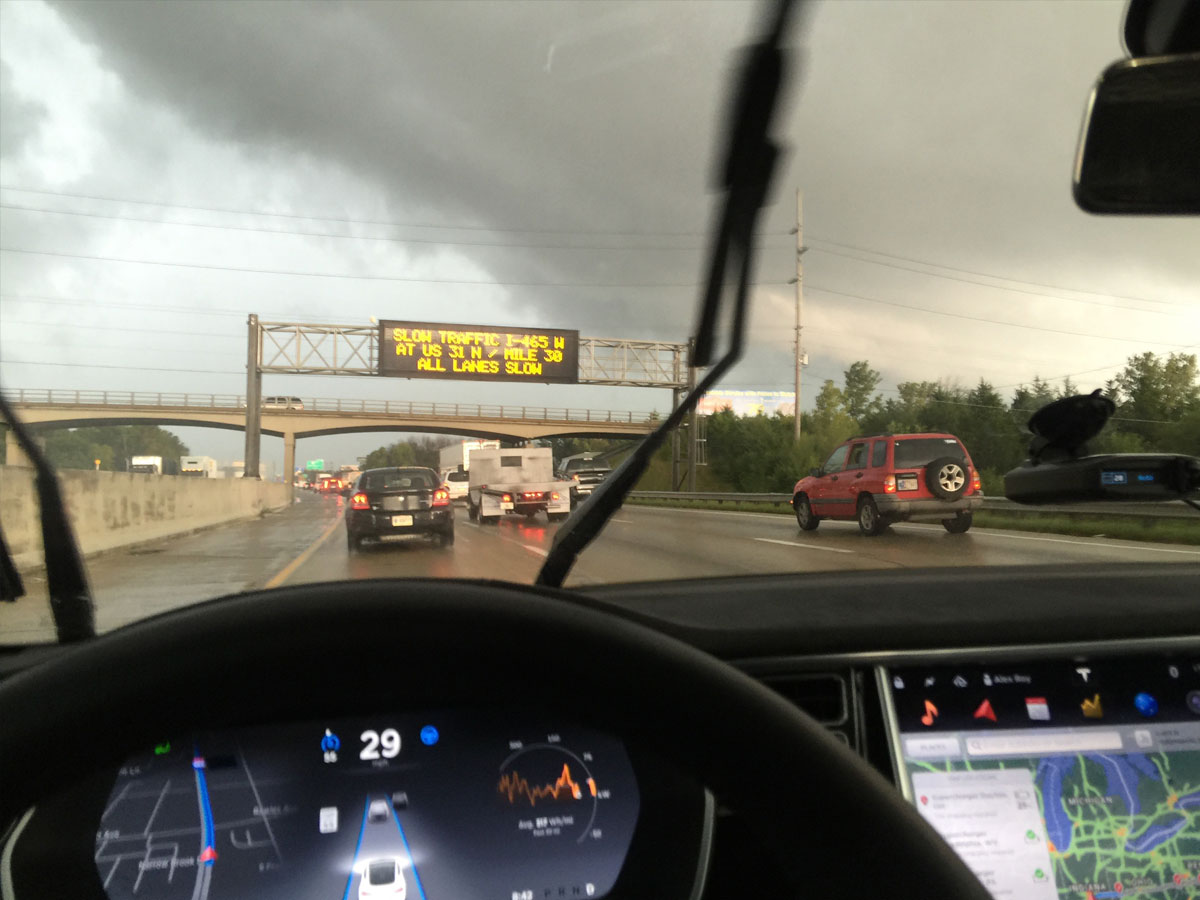 The full tech stack: radar detectors, GPS tracking, Waze, and more
- iPad Mini running Waze (traffic, accidents, police)
- Tesla’s browser running web-based Waze variant as backup
- Valentine One radar/laser detector
- Escort Max360 connected via Bluetooth to iPhone
- Samsung Edge S7 running Comma.ai’s Chffr for data logging
- US Fleet Tracking GPS unit for evidence
- Uniden Home Patrol II radio scanner
- Way too many GoPros
Charging Strategy
 Quick Supercharger stops were essential
We used Tesla’s Supercharger network exclusively. Every minute counts, and so does every quarter mile to the on-ramp. Our charging stops were fewer than Tesla’s GPS predicted — that’s the optimization advantage.
Is 55 Hours Breakable?
Absolutely. We could get back in the same car and cut two hours off. A better car? Three. With every improvement in battery and charging tech, times will fall.
 55 hours later: Red Ball Garage, New York City
This will go on until electric cars match gas cars for range and charge times. Then someone will hack an autonomous EV and break the 28:50 Cannonball record.
Nine years later, we finally did something close to that — a zero-intervention coast-to-coast run in a Tesla with FSD v14.2.2.3.
📰 Read the full story in The Drive →
This was the groundwork for what we achieved in 2026: We Let a Tesla Drive Itself from LA to NYC